AI Blogging for Partner Marketing: Turning Reseller, VAR, and Channel Enablement into Shared Search Traffic


Channel programs have a content problem.
You build decks, one-pagers, FAQs, sales playbooks, and partner portal resources. Maybe you even run quarterly enablement webinars. Yet when you Google the problems your product solves, you see:
- Your site (sometimes)
- A competitor or two
- Review sites and forums
- But almost never… your partners
That’s a missed opportunity.
Your resellers, VARs, and channel partners are often closer to the customer than you are. When their sites show up in search with strong, educational content that complements yours, everyone wins:
- You expand your footprint on the SERP without buying more ads.
- Partners get inbound leads and authority in their niche.
- Buyers see a consistent story reinforced across multiple trusted sources.
AI blogging is the lever that makes this scalable.
With an engine like Blogg, you can turn partner enablement from “content library nobody uses” into a shared search strategy that quietly compounds traffic for you and your partners.
Why Shared Search Traffic Should Be a Channel KPI
Most B2B buyers now do the majority of their research before they ever talk to sales. Studies consistently show that buyers are often 60–70% through their decision process and have consumed 10–12 pieces of content before engaging a rep.
If all of that research happens on:
- Competitor blogs
- Review platforms
- Community posts
- AI-generated answer boxes that barely reference you
…then your channel program is fighting uphill.
Shared search traffic changes the equation:
- Higher surface area in search. Multiple pages (yours + partners) can rank for the same cluster of problems, queries, and use cases.
- More trust-building touchpoints. Buyers see independent partners validating your positioning and use cases.
- Shorter sales cycles. Prospects who come through partners have often read both your content and the partner’s implementation stories.
- Stickier partners. When you help partners generate leads and revenue from their own domains, your product becomes core to their growth, not just another line on the line card.
The question is: how do you get from “we have some PDFs in the portal” to “our partner ecosystem owns the conversation for our category in search” — without hiring an army of writers?
That’s where AI blogging for partner marketing comes in.
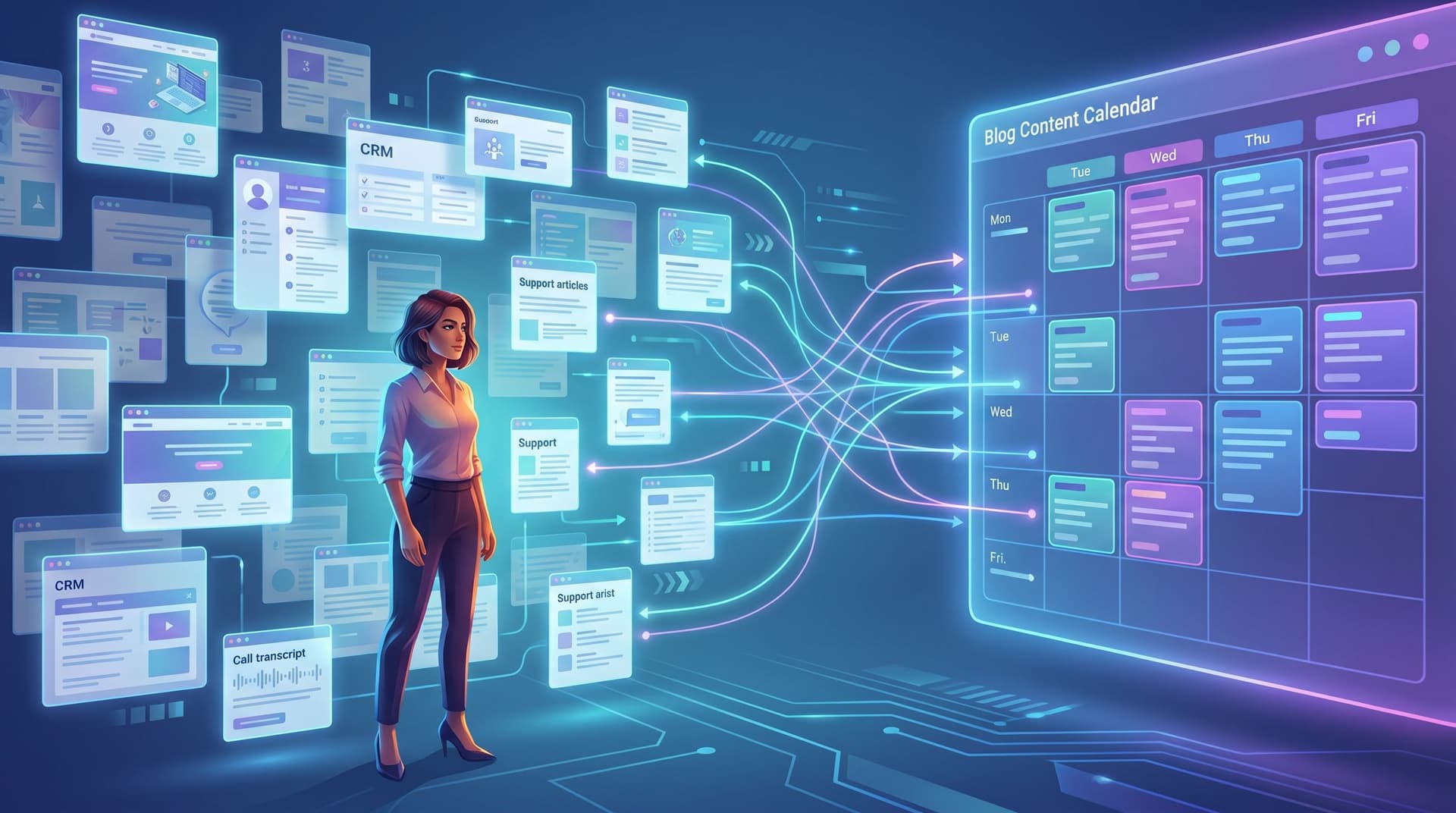
The Core Idea: Turn Enablement Assets into a Network of AI-Powered Blogs
Most mature channel programs already have the raw material:
- Sales playbooks
- Competitive battlecards
- Implementation guides
- Integration one-pagers
- Co-marketing decks and case studies
The problem isn’t content volume; it’s distribution and format.
Enablement content is usually:
- Locked in PDFs, LMS modules, or portal folders
- Written for internal consumption, not buyers
- Difficult for partners to adapt to their own brand and ICP
An AI-powered blogging platform like Blogg lets you flip this model:
- You centralize your best enablement content as a “source of truth.”
- AI turns it into search-optimized posts for your own blog.
- The same system generates customizable post packs for partners to publish on their own sites — localized, niche-ified, and co-branded.
- Internal links and CTAs are designed so traffic and demand flow both ways.
Now your channel enablement program isn’t just training; it’s a shared content engine.
Step 1: Define the Joint Search Territory You Want to Own
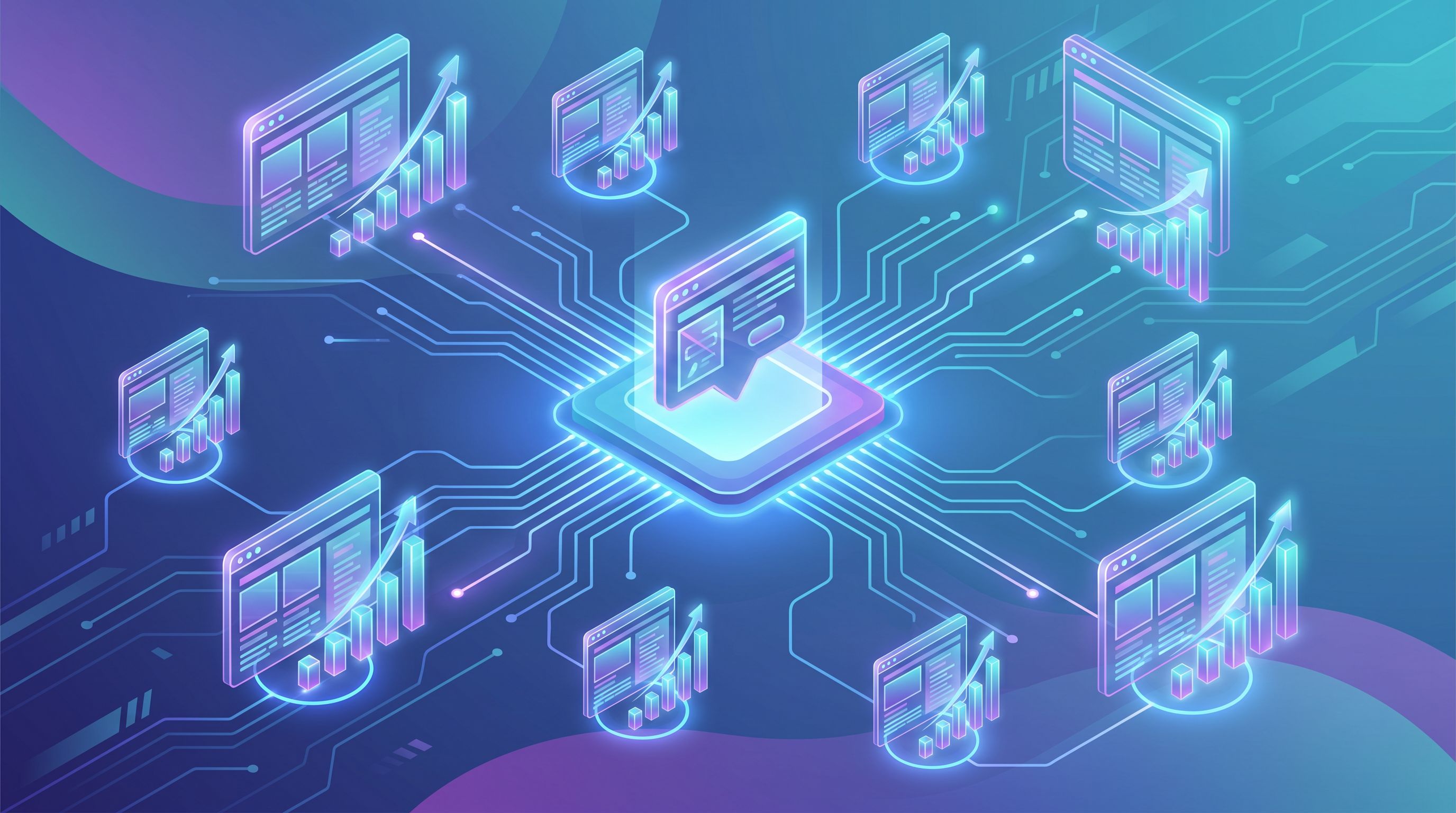
Before you generate a single post, decide where you and your partners should show up together.
Think in terms of jobs-to-be-done and use cases, not just product features. If you want a deeper dive on structuring content this way, see Beyond Topical Authority: Structuring AI-Generated Content Clusters Around Jobs-to-Be-Done, Not Just Keywords.
Start with three maps:
-
Core buyer jobs you want to own
- "Consolidate our tech stack"
- "Prove ROI on this initiative"
- "Integrate tool X with system Y"
-
Partner-specific angles
- Vertical: "for manufacturing," "for higher ed," "for healthcare"
- Geography: "for DACH," "for APAC mid-market"
- Service layer: "managed deployment," "white-glove onboarding"
-
Competitive moments
- "[Your category] vs [legacy approach]"
- "[Competitor] alternatives"
- "build vs buy" comparisons
Your goal is to identify 3–5 content clusters where:
- Your site should be the authoritative pillar.
- Partner sites should own niche, implementation, and verticalized angles.
Example cluster: “Salesforce integration for subscription billing”
- Your blog: high-level overviews, product capabilities, roadmap.
- Partner A (SI): posts on complex multi-org deployments.
- Partner B (regional VAR): posts on local tax/regulatory considerations.
- Partner C (managed service): posts on ongoing optimization and reporting.
AI then becomes the engine that scales this cluster across your ecosystem.
Step 2: Build a Single Source of Truth for Partner-Facing AI Content
If you let everyone prompt AI independently, you’ll get:
- Inconsistent claims
- Conflicting pricing references
- Off-brand tone on partner sites
Instead, you want one master source of truth that every AI-generated partner post pulls from.
This is the same principle we use for vendor blogs themselves — see The ‘Single Source of Truth’ Prompt: Training Blogg on One Master Doc So Every Post Stays On-Message.
For partner marketing, your source-of-truth package should include:
- Positioning and messaging: value props, differentiators, ideal customer profiles.
- Feature → outcome mappings: not just what it does, but why it matters.
- Compliance and claims guardrails: what AI is not allowed to say.
- Partner program structure: tiers, incentives, co-marketing rules.
- Canonical CTAs: demo, partner directory, co-sell request, etc.
You can store this in a master doc and feed it directly into Blogg so every generated draft — whether for your site or a partner’s — is anchored in the same facts and tone.
Step 3: Design Repeatable “Partner Blog Packs” Instead of One-Off Campaigns
Rather than sending random blog ideas to partners, create standardized content packs that AI can generate and refresh on a schedule.
A basic Partner Blog Pack might include:
-
One pillar post (for your site)
- Broad, educational, 1,800–2,500 words
- Explains the problem space and your solution
- Links to partner directory and co-sell resources
-
3–5 partner-ready posts per partner Each tailored to the partner’s:
- Vertical or region
- Service offering (implementation, MSP, consulting)
- Typical deal size and buyer persona
Examples:
- "How [Partner] Helps Manufacturers Modernize Billing with [Your Product]"
- "5 Salesforce Integration Pitfalls Our Team Solves for EMEA SaaS Companies"
- "When to Call a VAR vs Go Direct for Your Subscription Billing Rollout"
-
Shared enablement assets turned outward
- A battlecard becomes “How to Evaluate [Category] Vendors in 2026”
- An internal FAQ becomes “13 Questions to Ask Before You Replatform”
Using Blogg, you can define these as templates:
- Input: partner profile, vertical, region, preferred CTA.
- Output: a full set of SEO-optimized drafts, ready for light partner editing.
Now, every time you launch a new feature, integration, or campaign, you’re not just updating your site — you’re shipping a network-wide content drop.

Step 4: Coordinate SEO So You Don’t Cannibalize Each Other
Shared search traffic works when you plan the overlap instead of accidentally competing on every keyword.
A few simple rules help:
1. You own the broad, category-defining terms.
- "What is [category]?"
- "[Category] platform"
- "[Category] software for enterprises"
Partners can still reference these topics, but their posts should:
- Target longer-tail, implementation-heavy queries.
- Emphasize their unique angle (vertical, geography, service layer).
2. Partners own niche and local angles.
Examples:
- "[Category] for multi-site retail chains"
- "[Category] implementation in Canada: tax and compliance checklist"
- "[Category] + [specific legacy system] migration guide"
Here, your site might have a general overview, but partners can go much deeper.
3. Use internal and cross-site links intentionally.
- Your pillar posts link out to 2–3 best-in-class partner posts for each cluster.
- Partner posts link back to your:
- Product feature pages
- Integration docs
- Partner directory or "Find a Partner" page
This creates a web of relevance that helps:
- Search engines understand the relationship between you and your partners.
- Buyers move smoothly from education (your blog) to evaluation (partner stories) to action (demos, scoping calls).
If you’re already thinking in terms of clusters and internal links on your own site, the ‘Topic Tree’ Method is a helpful model to extend out into your partner ecosystem.
Step 5: Turn Everyday Partner Conversations into Search Content
Your partners are constantly:
- Answering implementation questions
- Handling objections
- Comparing you to alternatives
- Troubleshooting edge cases
All of that is perfect blog material — but it usually dies in:
- Slack channels between your partner manager and the partner’s team
- Email threads
- Shared Notion pages
You can use AI to systematically mine these conversations and turn them into posts for both your blog and partner blogs.
For example:
-
A long Slack thread about a tricky integration →
- Your blog: "The 7 Most Common Integration Pitfalls (and How to Avoid Them)"
- Partner blog: "How We Solved a Multi-Org Salesforce Integration for a Global Manufacturer"
-
A recurring objection about pricing →
- Your blog: "How to Model Total Cost of Ownership for [Category] Platforms"
- Partner blog: "How We Help Clients Justify [Product] to Their CFOs"
If you want a deeper playbook on this mining process, check out From Founder DMs to Search Traffic: Mining Slack, LinkedIn, and Email Threads for Blogg‑Ready Content.
With Blogg, you can:
- Connect shared folders or transcripts.
- Let AI propose topics based on recurring patterns.
- Auto-generate briefs and first drafts for review by your partner managers and the partner’s marketing lead.
Step 6: Operationalize This as a Program, Not a One-Off
To make shared search traffic a real channel lever, treat it like a program with owners and metrics, not a side project.
Key components:
1. Clear roles
- Vendor marketing: owns the source-of-truth, templates, SEO strategy.
- Partner marketing/enablement: manages partner onboarding, approvals, co-branding.
- Partners: localize, add stories, publish, and promote.
2. Simple partner experience
- A quarterly “content drop” email with:
- Suggested posts
- Drafts attached or in a shared workspace
- SEO guidance and recommended titles
- Optional co-marketing calendar where partners can opt into campaigns.
3. Shared metrics
Go beyond “number of assets downloaded from the portal.” Track:
- Posts published per partner per quarter
- Organic sessions to those posts (vendor + partner sites)
- Assisted opportunities influenced by partner blog content
- Co-branded leads (form fills, demo requests) originating on partner posts
4. Guardrails for quality and brand
Use AI guardrails so that:
- Claims stay accurate and compliant.
- Tone stays aligned with your brand and the partner’s.
- Sensitive comparisons (e.g., competitors) follow your legal guidelines.
If you’re coordinating multiple teams and stakeholders, From Editorial Chaos to ‘AI Guardrails’: Designing Simple Rules So Multiple Teams Can Safely Use Blogg has a framework you can adapt directly for partner programs.
Step 7: Repurpose Every Partner Post Across Channels
Once you and your partners are publishing AI-assisted blog content, don’t stop at the blog.
Each post can be atomized into:
- Email nurture sequences (vendor + partner)
- Social posts for partner AEs and SEs
- One-pagers and talk tracks for joint webinars
- Snippets for partner portal announcements
With Blogg, you can set up workflows where each approved blog draft automatically spins out:
- 3–5 LinkedIn posts
- A short partner newsletter blurb
- A webinar outline or sales enablement summary
For more on this “beyond the blog” thinking, see Beyond the Blog: Using AI to Spin Every Blogg Draft into Social, Email, and Sales Enablement Assets.
This not only amplifies reach; it also:
- Reinforces consistent messaging across all partner touchpoints.
- Makes it easier for partner sellers to talk about your product confidently.
- Increases the odds that buyers encounter your story multiple times before they ever fill out a form.
Putting It All Together: A Simple 90-Day Plan
If you want to pilot this without boiling the ocean, here’s a lightweight roadmap.
Month 1: Strategy and Setup
- Pick one content cluster to own with partners.
- Build or refine your single source-of-truth doc.
- Configure Blogg with:
- Your brand voice
- SEO guidelines
- Partner content templates
- Select 2–3 engaged partners for the pilot.
Month 2: Create and Launch Partner Blog Packs
- Use AI to draft:
- 1–2 pillar posts for your site
- 3–5 posts per partner
- Co-review drafts with each partner (one working session each).
- Publish and:
- Cross-link between your posts and partner posts
- Add posts to nurture sequences and social calendars
Month 3: Measure, Optimize, and Plan Scale
- Track early indicators:
- Indexed pages and impressions in search
- Early organic traffic trends
- Time on page and click-through to CTAs
- Gather qualitative feedback from partners:
- How easy was it to customize and publish?
- Did their sellers use the posts in deals?
- Use those learnings to:
- Refine templates and guardrails
- Design a rollout plan for the next 10–20 partners
By the end of 90 days, you should have:
- A working model of shared search traffic with real posts in the wild.
- Proof points you can take to leadership and additional partners.
- A repeatable AI-driven workflow you can expand without burning out your team.
Summary
Partner marketing has always promised "better together." AI blogging lets you finally make that true in search.
By:
- Defining joint search territories with your partners
- Anchoring all AI content in a shared source of truth
- Shipping standardized partner blog packs instead of random one-offs
- Coordinating SEO so you complement rather than cannibalize each other
- Mining everyday partner conversations for topics
- Operationalizing this as an ongoing program with clear metrics
- Repurposing every post across email, social, and sales enablement
…you turn reseller and VAR enablement into a network of always-on content that educates buyers long before anyone books a call.
Tools like Blogg make this feasible for lean teams. You don’t need dozens of writers; you need a clear strategy, good source material, and an AI engine that can keep your blog — and your partners’ blogs — publishing on schedule.
Your Next Step
If your partner portal is full of beautiful assets that rarely see the light of day, this is your chance to change that.
- Pick one content cluster where partners consistently help you win deals.
- Gather the enablement docs you already have for that area.
- Feed them into an AI blogging engine like Blogg and generate your first small set of vendor + partner drafts.
- Pilot with 2–3 motivated partners and watch how quickly you can turn “training material” into shared search traffic.
You don’t need to redesign your entire channel program to start. You just need one proof-of-concept that shows your partners — and your leadership team — what happens when enablement and SEO finally work together.
Start there. Then scale the network.