AI Blogging for Niche Local SEO: Turning Neighborhood-Specific Searches into Booked Jobs with Blogg

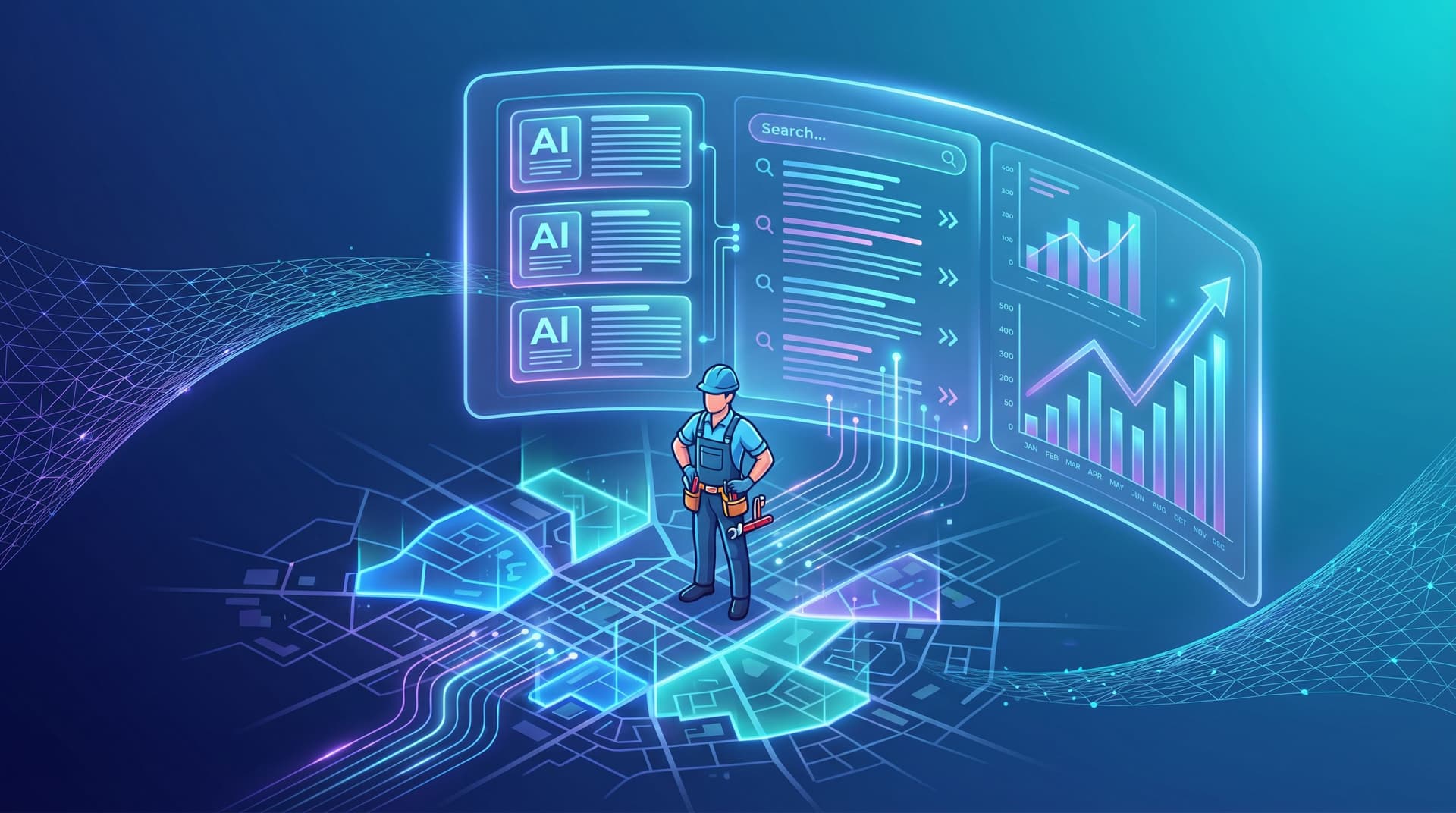
If you run a service business that depends on local customers—plumbers, roofers, med spas, dog walkers, home organizers, specialty clinics—your best buyers are already searching for you with neighborhood-level intent.
They’re not just typing “plumber” or “landscaper.” They’re typing:
- “emergency plumber in wicker park”
- “best lash extensions near capitol hill seattle”
- “eco friendly lawn care in east austin”
Roughly 46–50% of all Google searches now have local intent, and a huge share of those lead to a visit or a call within 24 hours. Being visible for neighborhood-specific queries isn’t a nice-to-have; it’s the difference between a quiet calendar and a booked-out week.
The challenge: most local businesses don’t have the time, budget, or writing muscle to publish the kind of consistent, hyper-local content that wins those searches.
That’s where AI blogging—and especially a platform like Blogg—changes the equation.
In this article, we’ll walk through how to use AI to:
- Identify neighborhood-level search opportunities that actually turn into jobs.
- Turn those into SEO-ready blog posts and content clusters without hiring a full-time writer.
- Build a repeatable system that keeps your local content fresh so you keep showing up—and getting booked.
Why Hyper-Local Blogging Matters More Than Ever
Local SEO used to be mostly about your Google Business Profile (GBP), citations, and a basic “Services” page. Those still matter. But search behavior has shifted in three big ways:
-
Searches are more specific and conversational.
People type (or say) things like “who installs tankless water heaters in oak park with good reviews” instead of just “water heater install.” -
Location is baked into the query.
City, neighborhood, or landmark references are now common: “near union station,” “in buckhead,” “by rice village.” -
Local intent converts fast.
When someone searches for a local service, they’re usually ready to act. Studies consistently show that the majority of local searches result in a visit or contact within a day, and a significant portion lead to a purchase or booking.
If your blog only covers generic topics—“How to Choose a Plumber,” “5 Benefits of Regular HVAC Maintenance”—you’re missing the layer where money changes hands: “for people like me, in my part of town, with my situation.”
Hyper-local posts do three things for you:
- Capture “ready to buy” intent (e.g., “same day water heater repair in logan square”).
- Build trust with local context (streets, buildings, weather, housing stock, regulations your audience recognizes).
- Differentiate you from national directories (HomeAdvisor, Thumbtack, big-box competitors) that can’t get that specific.
AI blogging lets you do this at a scale that would be impossible manually—without turning your site into a pile of thin, duplicated “city swap” content.
What “Niche Local SEO” Actually Looks Like
Before we talk about AI, let’s define the kind of content we’re aiming for.
Niche local SEO is specific on three dimensions:
- Service niche – not just “plumber,” but “historic home repiping,” “restaurant grease trap cleaning,” “tankless water heater installs.”
- Micro-location – not just “Chicago,” but “Wicker Park,” “Logan Square,” “Ravenswood,” or even a condo complex or subdivision.
- Situation or use case – emergency vs. planned, budget vs. premium, eco-friendly vs. standard, commercial vs. residential.
Combine those and you get queries like:
- “historic bungalow rewiring in east nashville”
- “pet friendly carpet cleaning near park slope brooklyn”
- “same day commercial fridge repair in fremont seattle”
These often show low or zero volume in keyword tools, but they:
- Map directly to high-intent, high-value buyers.
- Are easier to win because big sites don’t target them well.
- Add up: dozens of micro-queries can equal a meaningful lead pipeline.
Your blog is the perfect place to target these.
Step 1: Turn Real Jobs into Neighborhood-Focused Topics
The best hyper-local topics are already in your business. AI just helps you surface and structure them.
Here’s a simple workflow you can run weekly or monthly.
1. Mine your recent jobs
Pull the last 30–50 jobs from your CRM, booking system, or calendar. For each job, note:
- Neighborhood / ZIP code / landmark
- Service type
- Building type (apartment, single-family, commercial, etc.)
- Any special constraints (old wiring, HOA rules, parking, noise, local code quirks)
You’re looking for patterns, like:
- “We keep doing 1920s-bungalow electrical work in two or three zip codes.”
- “We’re getting a lot of last-minute drain calls from high-rise buildings downtown.”
2. Translate jobs into search-style questions
Ask: “If I were this customer, what would I have typed into Google?”
Examples:
-
Job: Emergency water heater replacement in a third-floor walkup in Capitol Hill (Seattle).
Possible searches:- “emergency water heater replacement capitol hill seattle”
- “who replaces water heaters in old seattle apartments”
-
Job: Rewiring a 1920s home in East Nashville to handle modern appliances.
Possible searches:- “rewiring old house east nashville electrician”
- “can my 1920s bungalow handle new appliances nashville”
3. Use AI to expand and cluster those questions
This is where a platform like Blogg shines. Instead of manually brainstorming, you can:
- Feed in a list of recent jobs and neighborhoods.
- Let Blogg generate search-style questions and long-tail phrases your buyers are likely using.
- Group those into topic clusters: “Historic Homes in X,” “High-Rise Plumbing in Y,” “Eco-Friendly Lawn Care in Z.”
If you want a deeper dive into turning raw ideas into a structured pipeline, we break that down in detail in From Idea Backlog to Ranked Posts: Turning Your Existing Content Wishlist into an AI-Driven Publishing Pipeline.

Step 2: Design “Neighborhood Story” Templates Instead of Cookie-Cutter City Pages
The biggest risk with AI in local SEO is duplicate-feeling content: 50 posts that all read like “We are the best [service] in [city]. Call us today!”
Search engines (and humans) ignore that.
To avoid this, you want templates that force specificity—especially around local details.
Here’s a simple “Neighborhood Story” template you can implement in Blogg or your own prompt system.
A. Hook with a familiar local scenario
Open with something your neighbors recognize:
- Local landmarks or streets: “If you live near the Belmont ‘L’ stop…”
- Housing stock: “Most East Austin bungalows were built before central AC was standard…”
- Weather patterns: “After a few freeze-thaw cycles, brick steps in Beacon Hill start to…”
B. Explain the specific problem in that area
Tie your service to local realities:
- Soil type affecting foundations
- Tree species causing root intrusion
- Common building codes or HOA rules
- Typical age of plumbing or wiring
C. Walk through a real or composite job
Tell a short story:
- What the homeowner or manager noticed.
- What you found on inspection.
- How the neighborhood context shaped your solution.
- The outcome (and how fast they were back to normal).
D. Answer neighborhood-specific FAQs
End with a short FAQ section tied to that area:
- “How much does X usually cost in [neighborhood]?”
- “How soon can you get to [neighborhood] for emergencies?”
- “Do you handle [building type] in this area?”
In Blogg, you can bake this into your content preferences so every AI-generated post:
- References real neighborhoods and conditions.
- Uses customer language from your calls and emails.
- Stays on-brand while still being locally specific.
If you’re curious how to keep AI content high-quality without slowing everything down, we cover lean review systems in Guardrails, Not Handcuffs: Simple Review Systems That Keep High-Volume AI Blogs On-Brand and Low-Risk.
Step 3: Build Local Content Clusters That Lead to Booked Jobs
One hyper-local post can rank and convert on its own. But you’ll see much better results when you think in clusters:
- One pillar page for a service + city.
- Several supporting posts for neighborhoods, building types, or situations.
Example: Electrician in Portland
Pillar page:
“Residential Electrician in Portland, OR: Repairs, Rewiring, and Panel Upgrades”
Supporting AI-generated posts could include:
- “Rewiring 1920s Craftsman Homes in Sellwood-Moreland: What Homeowners Need to Know”
- “Electrical Panel Upgrades for Eastside Portland Bungalows: Costs, Timelines, and Permits”
- “Solving Flickering Lights in Pearl District Condos: Common Issues in High-Rise Buildings”
- “EV Charger Installation for Narrow Driveways in Northeast Portland: Parking, Power, and Code Tips”
Each supporting post:
- Links back to the pillar page.
- Includes clear calls to action for that neighborhood (“We serve all of Sellwood-Moreland and nearby areas—see our availability this week.”).
- Uses internal links to related posts (e.g., a general “How to Plan an Electrical Upgrade” article).
With Blogg, you can:
- Define your pillar pages and priority services.
- Have the platform generate supporting hyper-local topics and outlines.
- Schedule those posts over weeks or months so your site gradually builds a dense, neighborhood-aware content footprint.
For a broader framework on planning months of content around your business cycles, check out The ‘Momentum Map’: Planning 6 Months of AI Blog Content Around Product, Sales, and Seasonality.

Step 4: Optimize for Local Search Features that Actually Drive Calls
Blog posts alone won’t win local SEO. They need to plug into the rest of your local presence.
Here’s how to connect the dots so those neighborhood posts turn into real bookings.
1. Align posts with your Google Business Profile
For each priority service + area:
-
Mention that service and neighborhood consistently across:
- Your Google Business Profile description and posts.
- Your website service pages.
- Your hyper-local blog posts.
-
Use your blog posts as GBP post content: summarize a post and link back to the full article.
2. Add local schema and internal links
Ask your developer or SEO to:
- Implement LocalBusiness schema with accurate NAP (name, address, phone).
- Use Breadcrumb and Article schema on blog posts.
- Internally link from:
- Neighborhood posts → city service pages.
- City service pages → booking/contact pages.
3. Make it effortless to contact you from any post
On every hyper-local post, add:
- A sticky or prominent phone number (with click-to-call).
- A short “We serve [neighborhood]” line near the top.
- A simple booking form or link (even better if it pre-fills the service or area).
4. Use AI to keep posts fresh
Local posts can go stale—pricing changes, regulations update, neighborhoods evolve. You don’t want a human manually revisiting 200 posts.
Instead, use Blogg to:
- Audit older posts for outdated details (hours, pricing ranges, service areas).
- Suggest lightweight refreshes: new examples, updated FAQs, revised CTAs.
- Automatically schedule content refresh cycles (e.g., review high-performing local posts every 6–9 months).
This isn’t just about rankings; it’s about making sure someone who finds you through a two-year-old post still gets accurate, conversion-ready information.
Step 5: Measure What Matters: From “Near Me” Impressions to Booked Jobs
Traffic is nice. Calls, forms, and bookings pay the bills.
Here’s a simple measurement plan that doesn’t require an analytics degree.
Track three levels of performance
-
Visibility
- Impressions and clicks for local queries (via Google Search Console).
- Map pack and organic rankings for your main service + city terms.
-
Engagement
- Time on page and scroll depth for neighborhood posts.
- Click-throughs from those posts to your contact or booking page.
-
Conversion
- Calls from pages (use call tracking numbers if possible).
- Form fills that mention a neighborhood or reference a specific article.
- Booked jobs tagged with “source: organic blog” in your CRM.
Use AI to connect the dots
Instead of manually combing through logs, you can:
- Export data from your CRM and analytics tools.
- Let Blogg summarize which posts and neighborhoods are:
- Driving the most calls.
- Producing the highest-value jobs.
- Underperforming and need a refresh.
Over time, this lets you:
- Double down on neighborhoods that convert well.
- Test new content for adjacent areas.
- Adjust your on-page messaging to match the real questions and objections you see in leads.
Putting It All Together: A Simple 30-Day Plan
If you want a concrete starting point, here’s a 30-day roadmap you can run with Blogg:
Week 1 – Map your service + neighborhood matrix
- List your top 3–5 services.
- List your top 5–10 neighborhoods or micro-areas.
- Pull 30–50 recent jobs and tag them by service + neighborhood.
- Feed this context into Blogg as part of your account setup or content preferences.
Week 2 – Generate and approve your first cluster
- Use Blogg to:
- Propose 1–2 pillar pages (service + city).
- Generate 6–8 supporting neighborhood posts.
- Review and lightly edit for accuracy, brand voice, and compliance.
- Publish the pillar and 2–3 supporting posts.
Week 3 – Connect posts to your sales process
- Add clear CTAs and contact options to each post.
- Update your Google Business Profile with a post linking to one of the new articles.
- Train your team to reference these posts on calls and in emails (“We actually wrote about this exact issue in [Neighborhood]—I’ll send you the link.”).
Week 4 – Measure and refine
- Check early data: impressions, clicks, and any leads mentioning those areas.
- Use Blogg to suggest two refreshes or follow-up posts based on what’s resonating.
- Plan your next cluster for a different high-value neighborhood.
Repeat that cycle, and within a few months you’ll have:
- A library of neighborhood stories that show real expertise.
- Consistent visibility for “service + neighborhood” searches.
- A clear line from hyper-local blog posts to booked jobs on your calendar.
Summary
Neighborhood-level searches are where your best local customers live. They’re specific, high-intent, and often underserved by generic city pages and directory sites.
By combining your on-the-ground experience with AI-powered blogging, you can:
- Turn real jobs into search-style questions your buyers are asking.
- Use structured “Neighborhood Story” templates to create unique, locally grounded posts at scale.
- Build service + city pillar pages supported by rich neighborhood content clusters.
- Tie everything into your Google Business Profile, schema, and booking flows so posts lead directly to calls and jobs.
- Use AI to refresh, measure, and iterate without adding a full-time content team.
Platforms like Blogg make this practical for busy owners and lean marketing teams: you define the neighborhoods, services, and brand guardrails; the system handles ideation, drafting, scheduling, and refreshes.
Ready to Turn Local Searches into Booked Jobs?
If your competitors are already showing up for “best [service] near me,” they’re not winning because they write better—they’re winning because they publish more specific, more consistent local content.
You can catch up—and pass them—without becoming a full-time blogger.
Start by:
- Listing your top neighborhoods and services.
- Feeding that context into Blogg.
- Letting the platform generate your first cluster of hyper-local posts—and then watching how those posts start turning neighborhood searches into real bookings.
The sooner you start, the sooner your blog becomes more than a brochure—and starts acting like a quiet, always-on local sales rep for every block you want to own.